
Designing a family home that actually works: what to consider before you start
A family home is the hardest brief in residential design. It needs to function brilliantly for small children and teenagers simultaneously. It needs to feel grown-up and considered while being genuinely robust. It needs to be calm enough for adults to decompress and energetic enough for children to feel at home.
I've designed a number of family homes across SW London over the years, including my own and the same questions come up on every project. Here's what I'd encourage any family to think through before they begin.
Start with how your family actually lives
Not how you'd like to live, or how you imagine you might live once the renovation is done. How you actually live right now, where the bags get dumped when you come in, where the children do their homework, where you end up sitting in the evenings (even when you meant to use the sitting room)!
A good brief starts with honest observation rather than aspiration. The most successful family homes I've worked on have been designed around real habits and real routines, with aspiration layered on top rather than substituted for reality.
The layout question
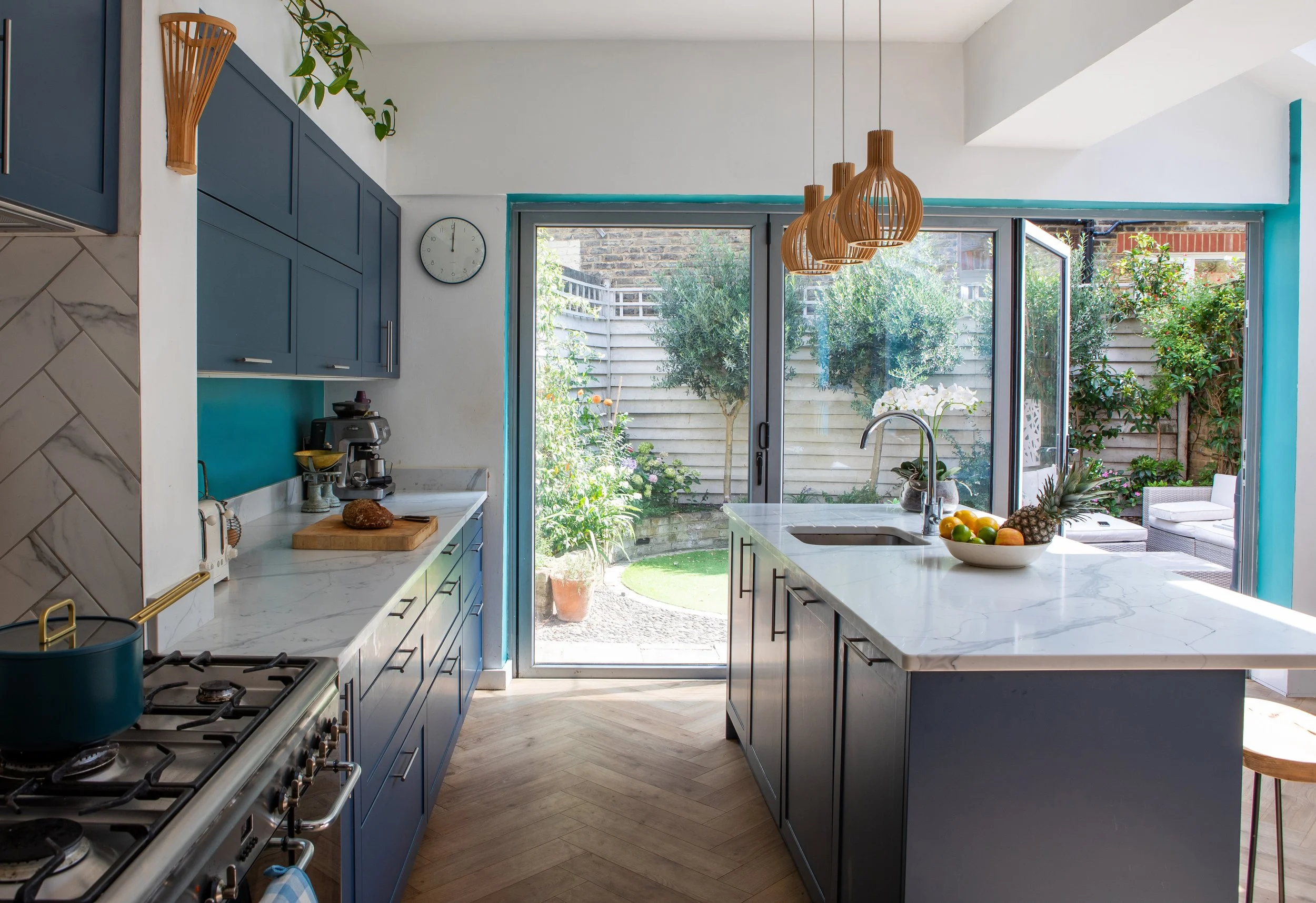
Most modern families want open-plan kitchen, dining and living spaces - and for good reason. These rooms work hard, support the way contemporary families spend time together and connect the interior to the garden in a way that formal, separated rooms simply can't.
But open-plan living isn't without its trade-offs. Noise travels. There's nowhere to escape to. As children get older and need to do homework or have friends over, the absence of a secondary space becomes increasingly felt.
The homes I find most successful for families tend to have a generous open-plan kitchen and dining area as their heart, plus at least one additional room that serves as a retreat - a snug, a study, a playroom that can eventually become a teenager's sitting room. Planning for how your family's needs will change over the next ten years, is as important as designing for how they look right now.
Storage — more than you think you need
Children generate stuff at a rate that consistently surprises even the most organised parents. Coats, shoes, sports equipment, school bags, art projects, bicycles - all of it needs somewhere to go and if you don't design that somewhere into the architecture, it will colonise whatever space is available!
Boot rooms and utility rooms have become an aspirational standard in SW London family renovations for good reason - they create a decompression zone between the outside world and the interior of the house, keeping mud, coats and clutter contained. Well-designed built-in storage throughout the rest of the house means that the main living spaces can remain calm even when life is chaotic.
Durability matters as much as aesthetics
The most beautiful sofa in the world is a bad choice if it can't withstand the reality of family life. I always talk to clients about the difference between a material that photographs beautifully and one that will still look good in five years - and they're not always the same thing.
This doesn't mean compromising on quality or style. It means being thoughtful about where to invest - splurging on timeless pieces that will genuinely last, and being more pragmatic about elements that are likely to need replacing as children grow and tastes change.
Think about sight lines
One of the more practical considerations in family home design is the ability to see what's happening elsewhere in the house. Being able to keep an eye on young children playing in the garden while cooking, or on older children doing homework at the kitchen table while you make dinner - these things matter to parents in ways that become apparent only once you're living in a space.
The most successful family layouts I've worked on create natural sight lines between the kitchen and the garden, between the main living space and the areas where children tend to congregate. It's one of those design decisions that visitors won't notice, but that makes daily life significantly easier.
A note on timeline
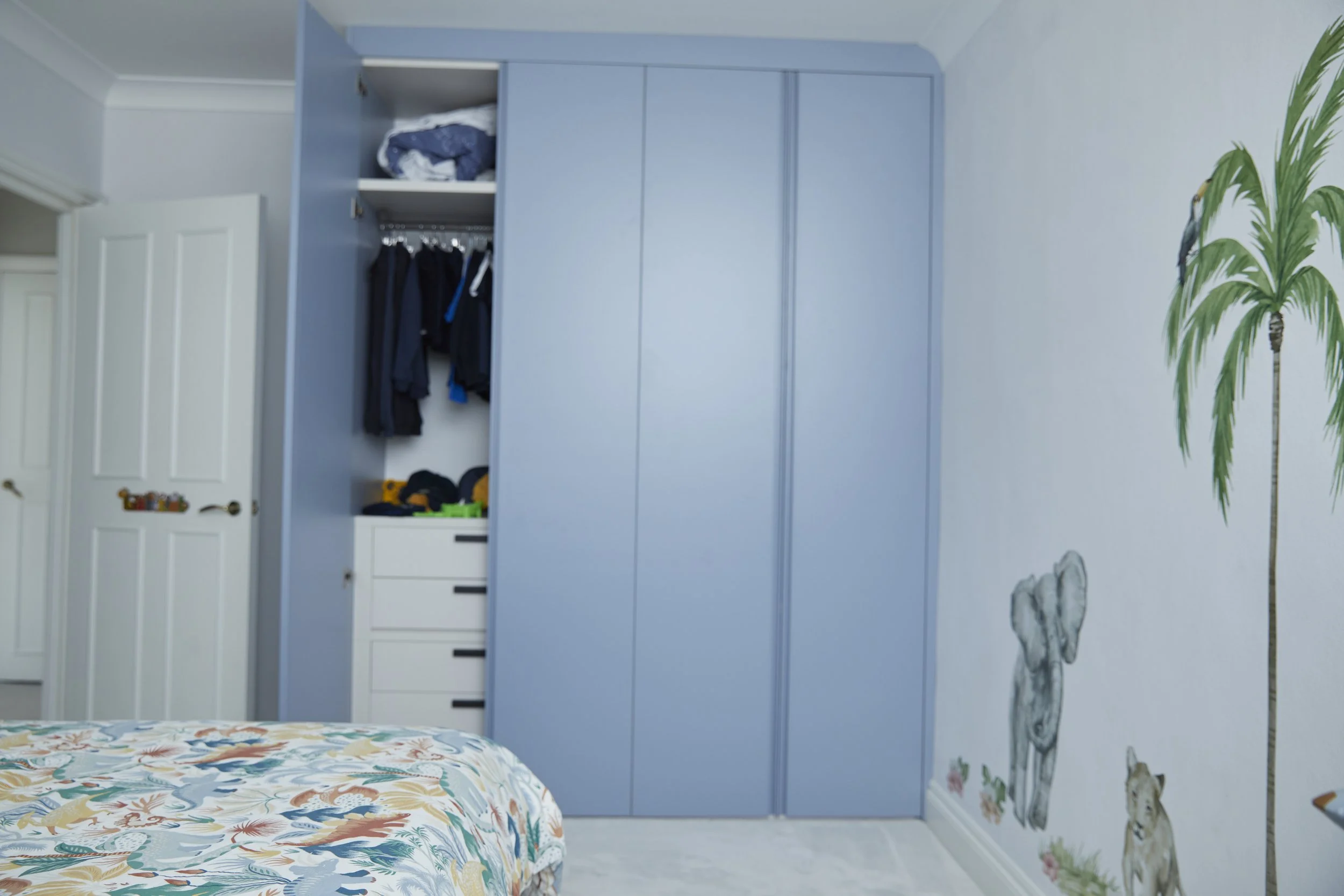
Family homes are rarely one-phase projects. The needs of a family with toddlers are fundamentally different from those of a family with teenagers and both are different again from the empty-nester stage that follows.
The best investment you can make at the outset is in a layout that works brilliantly now but can evolve. A playroom that becomes a study. A nursery bathroom that becomes an en-suite. Built-in storage that can be adapted. Designing with flexibility in mind costs very little extra at the planning stage and pays dividends over decades.
Emily Rennie Design is an interior architecture and design studio specialising in the renovation and extension of Victorian and Edwardian homes across SW London. Get in touch to arrange a complimentary Discovery Call.