
How your home affects the way you feel: the design principles behind a restorative space
We spend more time at home than anywhere else. Yet for most of us, the connection between how our home is designed and how we actually feel within it is something we rarely stop to think about - until something isn't working.
Over years of working on residential renovations across SW London, I've come to believe that the most successful homes aren't simply the most beautiful. They're the ones that feel right - calm, energising and balanced, in a way that's hard to articulate, but immediately apparent when you walk through the door.
Here are the principles I return to again and again when designing spaces that genuinely restore.
Light is everything
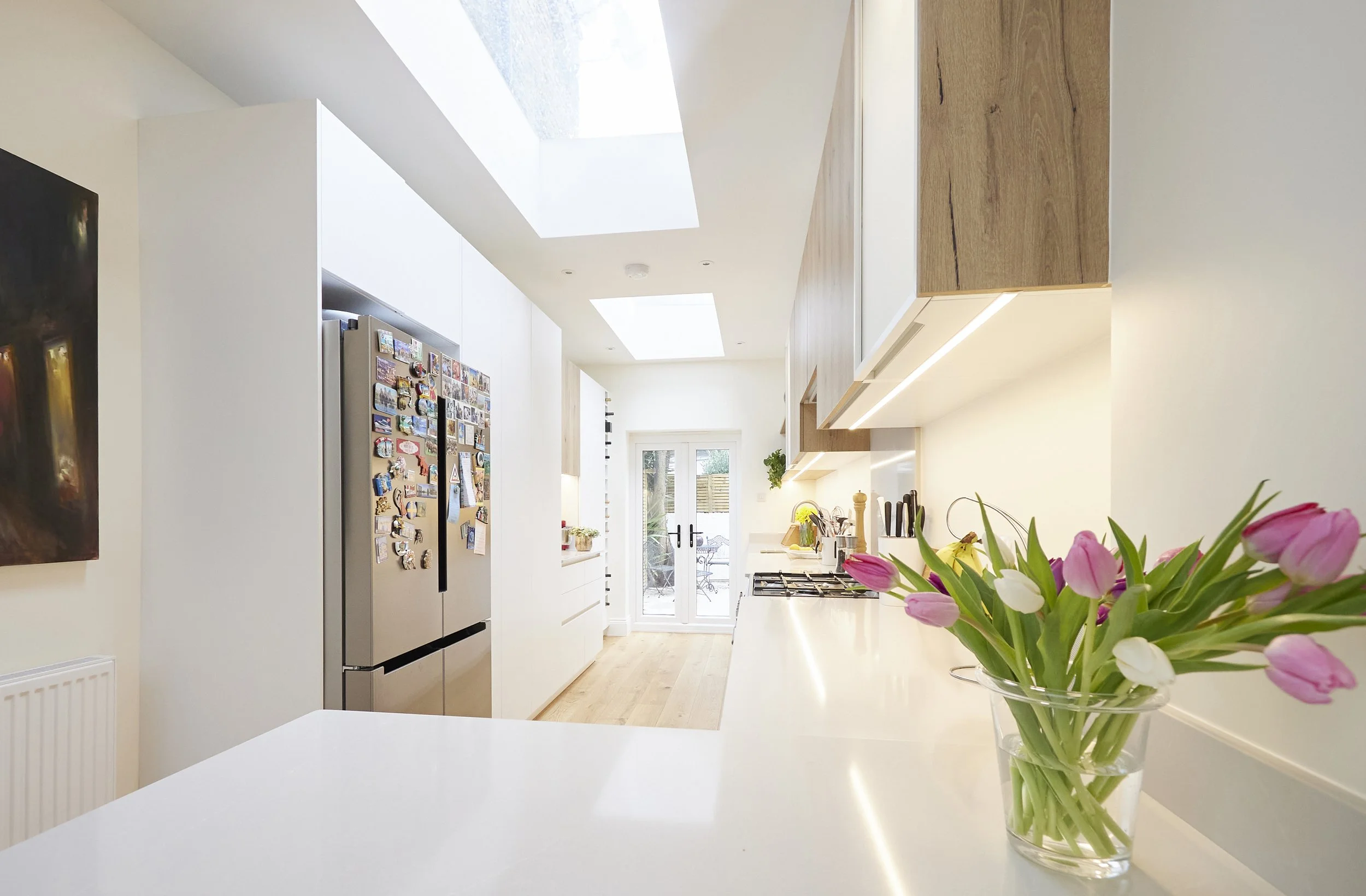
Natural light is the single most powerful tool in residential design, and the one most frequently underestimated at the planning stage. The direction a room faces, the size and placement of windows, the reflectivity of surfaces - all of these affect not just how a space looks, but how your body responds to it throughout the day.
On renovation projects I always begin by mapping how light moves through the property at different times of day. Sometimes the solution is structural - removing a wall, adding a rooflight, opening up a side return. Sometimes it's subtler such as repositioning furniture, choosing finishes that bounce rather than absorb light, or introducing mirrors with intention.
The goal is always to ensure that the spaces where you spend the most time such as a kitchen, living area, or home office, receive the best of the available daylight.
Natural materials age beautifully
There's a reason that stone, timber, linen and wool feel different underfoot and underhand from their synthetic equivalents. Natural materials have texture, variation and warmth that manufactured alternatives rarely replicate convincingly and they develop character over time rather than simply deteriorating.
I specify natural materials wherever possible, not just for aesthetic reasons but because they tend to create spaces that feel genuinely comfortable to inhabit. They also tend to be more sustainable, more repairable and longer-lasting, which means better value in the long run.
Contrast and variety within a home
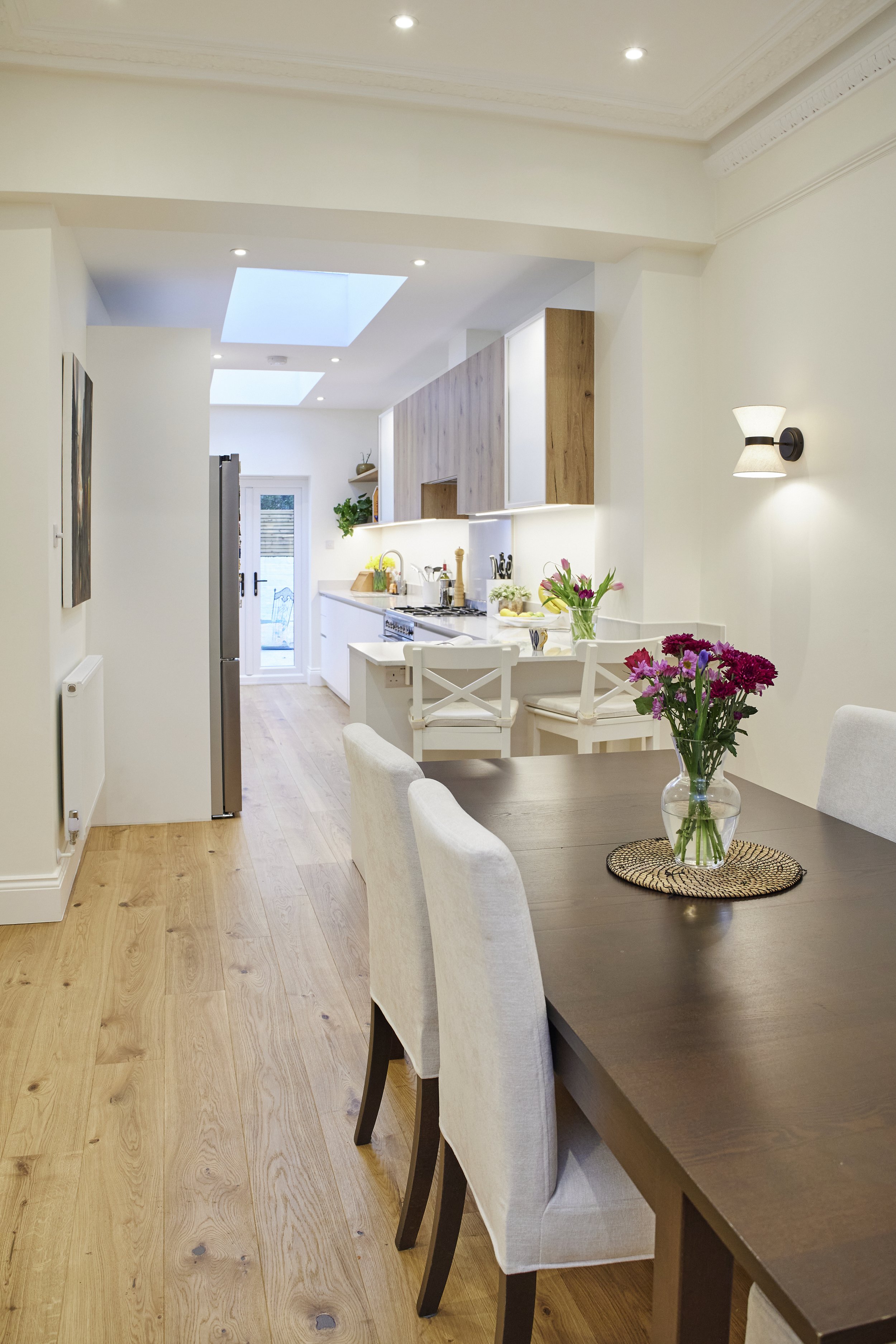
One of the ideas I find most compelling in residential design is the concept of variety of experience within a single home. The best-designed houses aren't uniformly open and light throughout - they offer contrast. A generous, sociable kitchen-dining space that opens to the garden. A smaller, cosier sitting room for quiet evenings. A bedroom that feels genuinely apart from the rest of the house.
Moving through a home that offers different atmospheres, different scales of space, different qualities of light - this is what makes a house feel rich and layered rather than merely functional.
Bringing the outside in
Connection to the natural world has a measurably positive effect on wellbeing, which is why I think carefully about how every home relates to its garden, its views and its surrounding environment.
This doesn't always mean large glazed extensions - though these can be transformative. It might mean a kitchen window positioned to look out onto a planted courtyard. Indoor planting that adds life and movement to a room. Natural materials that echo the textures of the landscape outside. The goal is to make the boundary between inside and outside feel permeable rather than abrupt.
Calm is a design choice
Perhaps the most important principle: calm doesn't happen by accident. It's the result of deliberate decisions about colour, proportion, storage, material and light - and about editing out everything that isn't earning its place.
This is why the brief conversation I have with every client at the start of a project matters so much. Not just what you want your home to look like, but how you want it to feel. Those two things are not always the same and understanding the difference is where the real design work begins.
Emily Rennie Design is an interior architecture and design studio specialising in the renovation and extension of period properties across SW London. If you'd like to discuss your project, get in touch to arrange a complimentary Discovery Call.